Are you an investor who values peace of mind more than the allure of earning high but volatile returns? If you are, you may have had to be content with a limited set of options so far.
Well, you have one more option to choose from, now... Conservative Hybrid Funds.
Conservative Hybrid Fund is one of the categories of Hybrid Schemes as per SEBI’s Categorization.
Here's some information regarding this category:
What are Conservative Hybrid Funds (CHFs)?
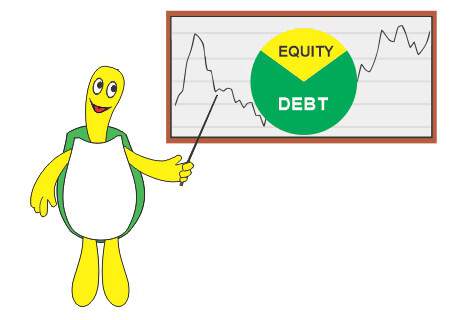
They are open ended hybrid scheme investing predominantly in debt instruments.
According to SEBI, asset allocation of scheme is :
| Type of Instruments |
Asset Allocation (% of Net Assets) |
| Debt instruments |
75% to 90% |
| Equities & Equity related instruments |
10% to 25% |
Such Schemes usually may invest 75-90% of their assets in government securities, treasury bills, bonds,
debentures and other money market instruments. The rest is allocated to equities & equity
related instruments.
It is 'conservative' in the sense that most of the corpus is invested in a mix of accrual and
duration instruments without taking on excessive credit or interest rate risk.
It is 'hybrid' means owing to the inclusion of Two asset classes within one Scheme.
How does a CHF help investors?
- The debt allocation has the potential to provide investors with a regular income - in the form of rent or dividend.
- The non-debt portion has the potential to grow in the Net Asset Value owing to changes in the market-price of the underlying assets over a period of time.
What are the costs inherent in a CHF?
As per SEBI Regulations, there is no Entry Load however, there is a Total Expense Ratio and Stamp duty which is borne by the investor and Exit Load as applicable
Who are they most suited for?
CHFs could be considered by those investors who are:
- Desiring diversified asset allocation within one scheme
- Preferring to outsource the task of managing the complexities involved in debt investing.
- Not attempting to try to profit from every movement in interest rates through active trading in debt securities.
How do CHFs differ from:
Aggressive Hybrid Funds (AHF):
AHF is an open-ended hybrid scheme investing predominantly in equity and equity related instruments. AHFs flip the asset allocation, investing 65-80% in Equity and Equity related instrument and the remaining 20-35% in debt instruments. They are taxed like Equity Schemes.
Balanced Hybrid Funds (BHF):
BHF is an open-ended balanced scheme investing in equity and debt instruments. They invest between 40 - 60% in Equity and Equity related instrument and the balance in debt securities.
Mutual Funds are permitted to offer either an
Aggressive Hybrid fund or
Balanced Hybrid Fund.
Dynamic Asset Allocation or Balanced Advantage Funds:
The scheme is an open-ended dynamic asset allocation fund. This funds typically do Investment in equity/ debt that is managed dynamically.
Unlike a CHF they must invest across various 'durations'.
Multi-Asset Allocation Funds:
As per SEBI’s categorization the scheme is an open ended scheme investing in three different asset classes. This type of schemes are mandated to invest in a minimum of three asset classes (Say for example, Equities, Debt and Gold) with a minimum allocation of 10% in each asset class.